
In today’s hyper-competitive manufacturing landscape, consumer expectations are higher than ever, and profit margins remain notoriously tight. A single batch of flawed products can result in massive financial losses, product recalls, and severe damage to a brand’s reputation. To combat these risks, forward-thinking industry leaders are turning to artificial intelligence. If you are exploring how AI-based defect detection improves product quality and efficiency, the answer lies in its ability to transform passive observation into proactive, highly accurate, and continuous monitoring.
By leveraging advanced algorithms, manufacturers can now identify microscopic flaws in a fraction of a second. Let’s dive into the mechanics, core benefits, and practical implementation strategies of this transformative technology.
For decades, quality control relied entirely on human inspectors. While human judgment is invaluable in many areas, staring at parts moving swiftly down a conveyor belt leads to visual fatigue, subjective decision-making, and inevitable mistakes.
When comparing manual inspection vs AI defect detection, the most glaring difference is consistency. AI algorithms do not get tired, distracted, or visually fatigued. By shifting to automated systems, manufacturers are successfully eliminating human error in inspection. An AI system applies the exact same rigorous standard to the first product of the day as it does to the ten-thousandth product at the end of a long shift.
To truly appreciate ai-based defect detection, it helps to understand the technology driving it. So, exactly how does computer vision identify surface defects?
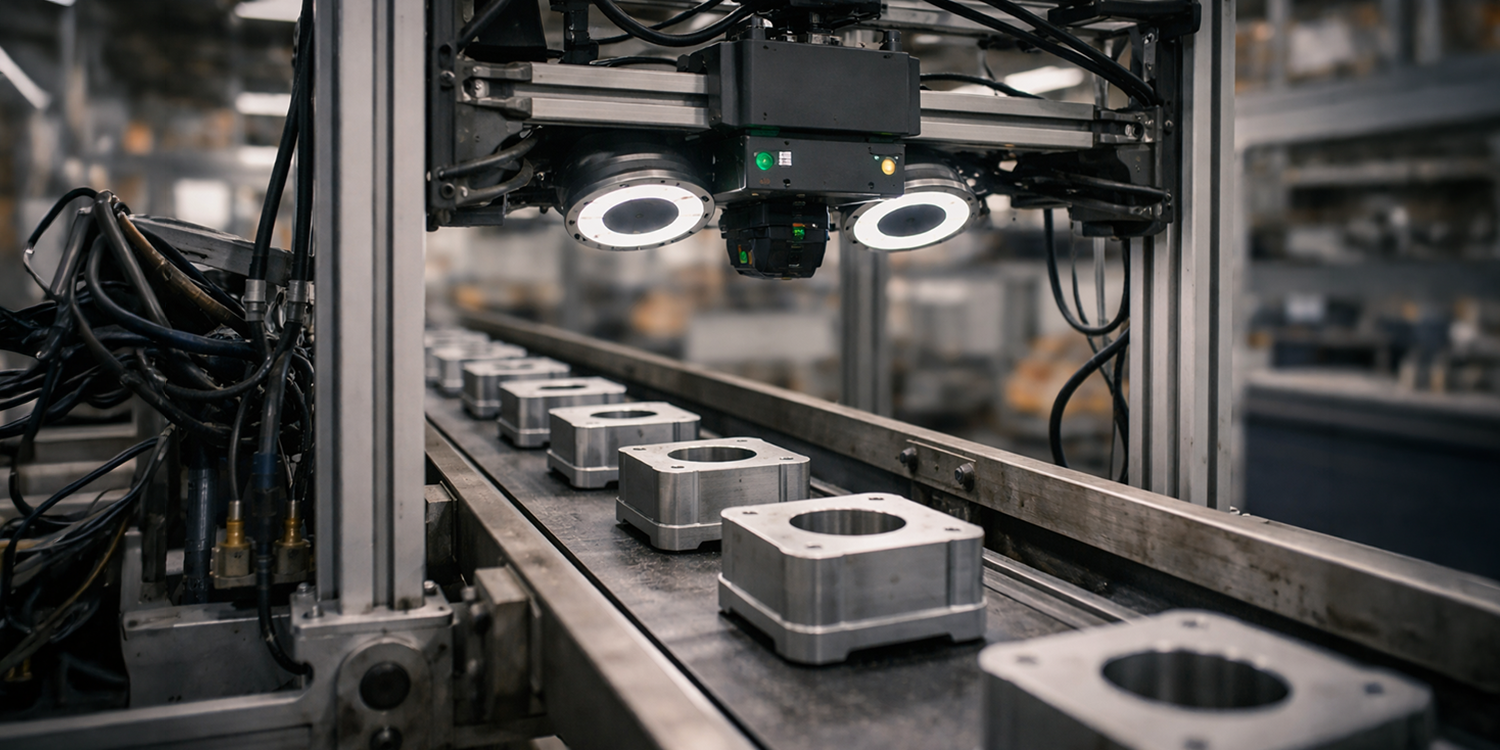
The process begins with high-speed industrial camera integration. These advanced cameras capture incredibly detailed, high-resolution images of products as they move along the line, regardless of lighting conditions or speed.
Once the images are captured, they are instantly fed into deep learning models for anomaly detection. However, these models aren’t born smart; they require rigorous neural network training for manufacturing data. Engineers feed the AI thousands of images of “perfect” products alongside images of various defects—such as scratches, dents, or misalignments. Over time, the AI learns the complex visual patterns of an acceptable product.
When a new image is processed, the AI instantly flags any deviations from the learned norm. Because the algorithms are continuously learning, they become exceptionally accurate, leading to significant false positive reduction in vision systems. This means less time wasted on manually re-checking products that the system mistakenly flagged as defective.
Implementing AI into your quality control processes yields a multitude of tangible benefits that directly impact your bottom line.
Traditional inspections often become bottlenecks, forcing lines to slow down so humans can keep up. AI quality assurance changes this dynamic entirely. Because AI can process images in milliseconds, it plays a massive role in optimizing production line throughput. You can run your lines at maximum capacity without sacrificing a single ounce of quality.
A major advantage of ai defect detection is its capacity for real-time quality control monitoring. Instead of discovering a defect hours after a batch has been produced, AI alerts operators the moment a flaw occurs. This allows line managers to stop the machine, adjust calibrations, and fix the root cause instantly.
When you catch errors immediately, you stop producing bad parts. This translates directly to reducing manufacturing scrap rate. Wasting fewer raw materials not only saves a tremendous amount of money but also aligns with corporate sustainability goals by reducing environmental waste.
Transitioning to automated systems can seem daunting, but a strategic approach ensures a smooth rollout. Here are the practical steps for integrating AI into your facility:
The transition toward intelligent automation is no longer a luxury reserved for the world’s largest corporations; it is rapidly becoming an industry standard. AI-driven systems are fundamentally changing the relationship between speed and accuracy. Manufacturers no longer have to choose between producing goods quickly and producing them perfectly.
Embracing this technology empowers businesses to protect their brand reputation, drastically reduce operational waste, and maximize the efficiency of their human workforce by reassigning them from tedious inspection tasks to higher-value problem-solving roles. By investing in intelligent defect detection today, manufacturers are building the resilient, highly optimized, and incredibly precise production facilities of tomorrow.



Comments are closed