
The cloud is not disappearing, but its role is changing. As devices, sensors, machines, and applications generate more time-sensitive data, organizations are moving intelligence closer to where that data is created. That shift is the heart of edge computing: process locally when speed, resilience, privacy, or bandwidth efficiency matters, then use the cloud for scale, coordination, storage, and deeper analysis.
No. The better way to frame the trend is not “cloud versus edge,” but “cloud plus edge.” Cloud computing still provides elastic resources, centralized management, and broad access to shared services, while edge computing pushes selected compute, data processing, and AI workloads closer to users, devices, and operational environments. NIST defines cloud computing around on-demand network access to shared configurable computing resources, while edge computing is commonly described as placing compute near data sources and consumers to reduce delays and support local action. (nvlpubs.nist.gov)
That distinction matters because many modern decisions cannot wait for a round trip to a distant data center. A connected camera, factory robot, medical device, vehicle system, or retail kiosk may need to filter data, recognize a pattern, trigger an alert, or keep running even when connectivity is degraded. The cloud remains the system of record and coordination layer; the edge becomes the place where immediate intelligence happens.
For years, the default pattern was simple: collect data, send it to the cloud, analyze it there, and return an answer. That approach works well for reporting, long-term storage, model training, collaboration, and applications that can tolerate delay. It becomes less effective when data is heavy, networks are constrained, or the response must happen in near real time.
Edge computing changes the sequence. Instead of moving every signal across the network, local systems can clean, compress, filter, and act on data first. Only the most useful events, summaries, exceptions, or training inputs need to travel upstream. NIST’s Edge AI work notes that a growing amount of data is created at network edges and cannot all be sent to the cloud as before, which makes edge learning and local intelligence increasingly important.
This is why the phrase “The End of the Cloud? Why Intelligence Is Moving to the Edge” resonates. It captures a real architectural shift, even if the ending is overstated. Intelligence is becoming more distributed because the world generating the data is distributed.
The most valuable edge computing benefits are practical, not theoretical. They show up when teams need systems to respond quickly, conserve bandwidth, protect sensitive information, or maintain service when a network is unreliable.
Key benefits include:
These benefits are especially visible when devices are numerous and data streams are continuous. A single sensor may not overwhelm a network, but thousands of sensors, cameras, gateways, and mobile endpoints can make centralized processing expensive, slow, or fragile.
The comparison between edge computing vs cloud computing is not about picking one winner. It is about deciding where each workload belongs. The cloud is usually better for centralized control, large-scale analytics, model development, backup, integration, and services that need broad accessibility. The edge is better for immediate action, local autonomy, and environments where connectivity, latency, or data movement creates risk.
A useful planning lens is to ask three questions:
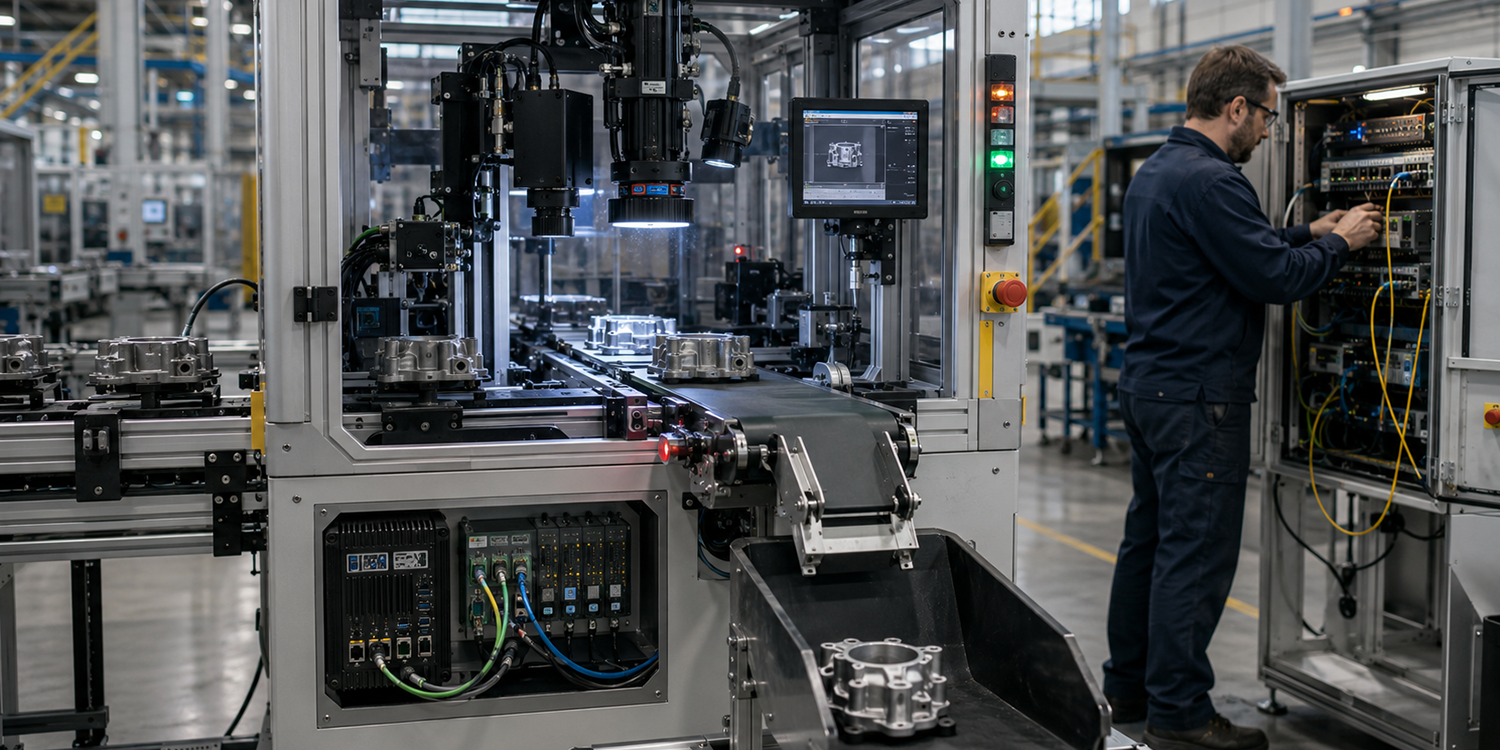
In practice, strong architectures blend both. A machine vision system might inspect products at the edge, report exceptions to a cloud dashboard, and use cloud infrastructure to retrain models. A retail application might personalize an in-store interaction locally, then sync transaction and inventory data centrally. The edge handles immediacy; the cloud handles breadth.
Industrial edge computing is one of the clearest examples of why intelligence is moving outward. Factories, energy sites, warehouses, transportation systems, and utilities often run in environments where uptime, safety, timing, and equipment visibility are critical. These sites also contain operational technology that may not have been designed for constant cloud dependence.
At the industrial edge, local compute can support condition monitoring, predictive maintenance workflows, quality inspection, process optimization, and real-time alerts. It can also bridge older equipment with newer analytics and automation systems. Red Hat notes that operations-edge use cases involve industrial edge devices and significant participation from operational technology teams, and that manufacturing environments often need platforms that unify previously isolated data systems.
The practical implication is cultural as much as technical. IT teams care about security, governance, deployment, and lifecycle management. OT teams care about continuity, safety, deterministic behavior, and plant-level realities. Successful industrial edge computing brings those priorities together instead of treating the factory floor like just another branch office.
Teams should start with workloads where local processing clearly improves speed, reliability, cost control, or data handling. Not every application belongs at the edge, and moving too much too soon can create unnecessary complexity. The best first projects are narrow enough to manage but important enough to prove value.
A practical edge-readiness checklist includes:
Start with one measurable use case, define what must happen locally, and decide what should still be synchronized with the cloud. Then plan for monitoring, updates, security policies, and device lifecycle management from the beginning. Edge projects fail when they are treated as isolated experiments; they scale when they are designed as part of a broader distributed architecture.
The cloud is not ending. It is becoming part of a larger, more distributed computing model where intelligence lives in more places. Gartner has projected that a growing share of enterprise-critical data will be created and processed outside traditional data centers or the cloud, which reinforces the direction of travel: more data, more devices, and more decisions at the edge. (gartner.com.au)
For leaders, the opportunity is to stop thinking of edge computing as a niche infrastructure topic. It is a way to make digital systems faster, more resilient, and more connected to the physical world. The organizations that benefit most will not abandon the cloud; they will learn how to place intelligence wherever it creates the most value.




Comments are closed