

Artificial intelligence is evolving at a breakneck pace, but its immense power has historically been concentrated in the hands of a few tech giants. This centralization raises valid concerns about data privacy, monopolistic control, censorship, and single points of failure. If you have ever wondered exactly why is decentralized AI important, the answer lies in shifting the balance of power back to users, developers, and creators. By distributing computing resources, datasets, and decision-making capabilities globally, we are effectively democratizing machine learning accessibility.
When analyzing decentralized AI vs traditional cloud models, the architectural differences are stark. Traditional models hoard data in massive, energy-intensive data centers owned by single corporations. In contrast, decentralized frameworks distribute the workload across a trustless, global network of participants. This transition does not happen overnight; it requires a robust, multi-layered technical foundation.
Let us dive deep into the Five technologies that will shape the future of decentralized AI and fundamentally change how we build and interact with machine intelligence.
In the past, training an intelligent model meant sending mountains of raw, often highly sensitive, data to a central server. Today, federated learning for data privacy flips this paradigm completely on its head. Instead of moving the data to the model, the model travels directly to the data.
How it Works
The AI algorithm is downloaded to local devices—such as smartphones, IoT devices, or hospital servers. The model learns from the local data and computes updates. Only these computed “learnings” (weight parameters) are sent back to the central system, while the raw data never leaves the device.
Why it Matters
This is currently one of the most effective privacy-preserving artificial intelligence techniques available to developers.
Hardware bottlenecks and exorbitant GPU costs are major hurdles for AI developers. Enter the concept of decentralized physical infrastructure networks for hardware (DePIN). These networks allow individuals and organizations worldwide to pool together and share their idle GPU and CPU resources.
By heavily incentivizing crowdsourced compute power through digital tokens or smart contracts, DePIN creates a vast, globally distributed supercomputer. This shift pairs perfectly with the rise of smart edge devices.
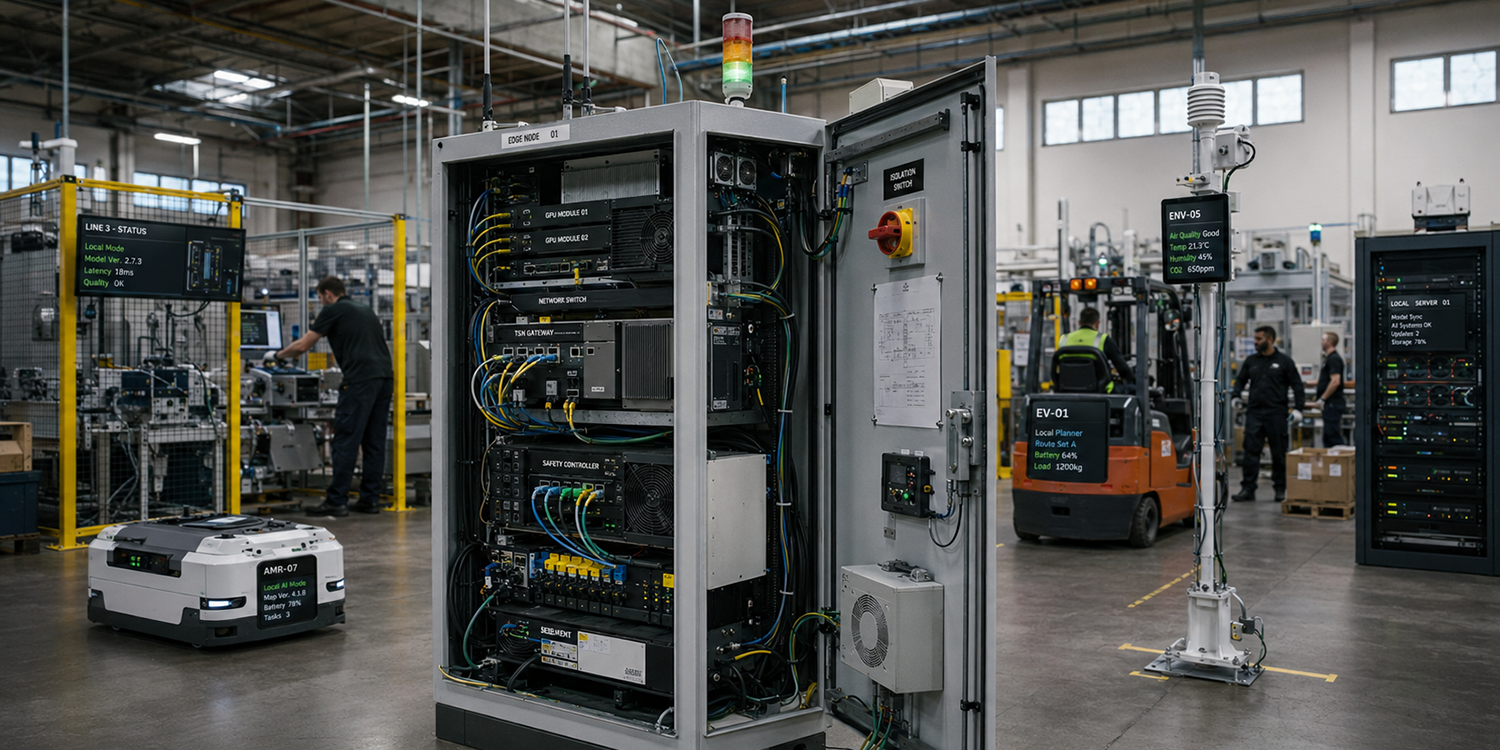
When you compare edge computing vs cloud AI performance, the benefits become immediately apparent. Edge computing drastically reduces latency by processing data geographically closer to where it is generated, rather than relying on a distant server farm. Together, DePIN and edge nodes ensure that decentralized AI remains fast, scalable, and entirely resilient against localized server outages.
A common question among enterprise developers is how to secure distributed machine learning when you cannot explicitly trust the thousands of anonymous nodes processing your data. The answer lies in advanced cryptographic methods that allow trustless collaboration.
Trust is the ultimate currency of the decentralized web. Integrating distributed ledger technology for governance ensures that every decision made about an AI model—such as parameter updates, bias corrections, or community guidelines—is recorded transparently on an immutable public ledger. Rather than a closed boardroom making decisions, decentralized autonomous organizations (DAOs) can vote on the future direction of an AI system.
Furthermore, leveraging blockchain integration for AI transparency provides a clear, unalterable audit trail of the exact data used to train these models.
For decentralized networks to truly rival and eventually surpass monolithic cloud systems, different AI models, datasets, and blockchains must be able to communicate seamlessly. Interoperability protocols for neural networks act as the universal translators of the decentralized web. They allow a specialized language model on one network to instantly request image-generation capabilities or data insights from an entirely different model on another network.
This deeply interconnected ecosystem is what paves the way for true autonomous AI. Imagine independent, self-executing AI agents that can:
These interoperable protocols ensure that autonomous agents are not siloed in walled gardens. Instead, they thrive in a collaborative, open-source environment where resources and knowledge flow freely.
The transition toward a decentralized AI infrastructure is not just a standard technological upgrade; it is a vital shift toward fairness, robust security, and open innovation. By blending federated learning, decentralized physical infrastructure, advanced cryptographic proofs, blockchain transparency, and robust interoperability, we are actively building an ecosystem where artificial intelligence serves everyone, rather than a select few.
As these technologies continue to mature and synergize, they will effectively dismantle traditional data monopolies and redefine the outer limits of machine learning—ushering in a more transparent, secure, and equitable digital world.
 Optimized by Seraphinite Accelerator

Comments are closed