

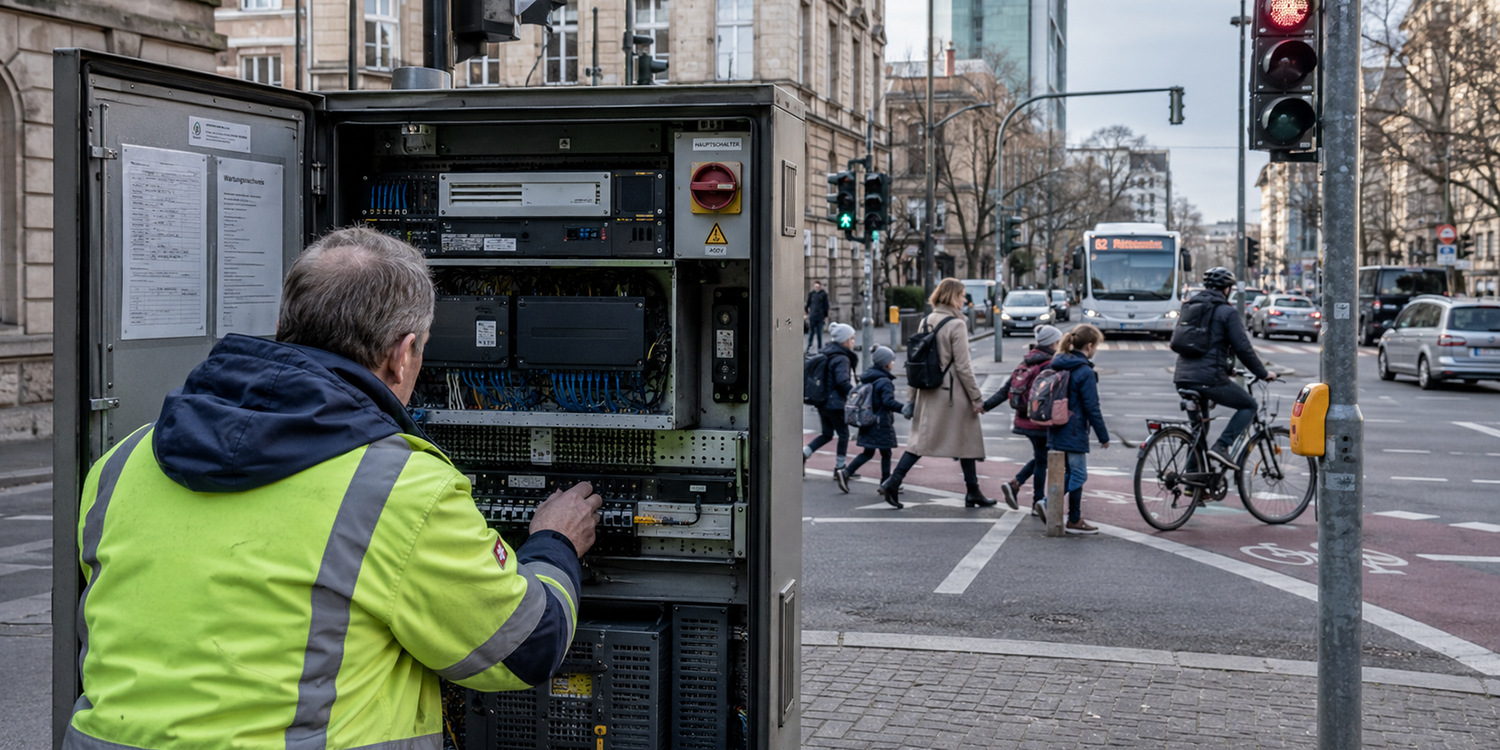
Have you ever wondered what happens in the blink of an eye when a self-driving car stops for a sudden pedestrian, or an industrial robot instantly halts its arm when a human steps too close? While it might appear to be magic, it is actually a highly orchestrated, split-second symphony of hardware and software.
Welcome to The Journey of a Single AI Decision: From Sensor to Action. This invisible, hyper-fast sequence forms the absolute backbone of modern ai decision-making. As machines become increasingly integrated into our daily lives, understanding this pipeline isn’t just for software engineers—it is crucial for business leaders, tech enthusiasts, and consumers alike.
By unpacking this process, we can see exactly how raw environmental inputs transform into intelligent, data-driven decisions. Let’s break down this fascinating journey step-by-step.
Before a machine can “think,” it must first be able to “feel” and “see” its environment. The journey begins at the very edge of the physical world, relying on advanced hardware to gather raw information. Understanding how sensors translate physical signals—such as light waves, temperature fluctuations, or acoustic pressure—into digital electrical impulses is the first critical piece of the puzzle.
Actionable Tip: If you are designing a smart system for your business, prioritize sensor redundancy. Do not rely on a single sensor type. Multi-sensor integration ensures that if one sensor is compromised (e.g., a camera blinded by direct sunlight), others can instantly compensate.
Once the raw data is collected, it must be rapidly transported and prepared. This stage dictates how AI processes sensor data before making a judgment. A critical architectural choice here is deciding between edge computing vs cloud processing.
Sending massive volumes of data to a remote cloud server, processing it, and waiting for a response takes time. While cloud processing is phenomenal for heavy, non-urgent computations (like analyzing monthly sales trends), it can introduce dangerous delays for physical robotics.
Therefore, for time-sensitive tasks, processing data locally on the device—at the “edge”—is mandatory. Reducing latency in AI systems is often the difference between a near-miss and a catastrophic collision. By handling data right where it is generated, engineers shave precious milliseconds off the reaction time, laying the groundwork for immediate, safe physical responses.
Now we reach the core cognitive phase of the journey. You might be asking, what is an AI inference engine? Simply put, it is the specialized software environment where a pre-trained AI model applies its learned intelligence to new, unseen data to make a final prediction or classification.
The exact machine learning inference pipeline steps generally follow a strict, rapid sequence:
To truly appreciate this, we must look at the underlying math. With neural network signal processing explained simply, the network assigns specific mathematical weights to different inputs, passing them through interconnected layers of artificial neurons to reach a logical conclusion. During this step, the system frequently employs predictive analytics to forecast immediate future states—such as anticipating that a cyclist is about to swerve into the car’s lane.
A major evolution in this phase is the shift in rules-based vs neural decision logic. Older, simpler systems relied on rigid programming (e.g., If an obstacle is 10 feet away, then apply brakes). Today’s neural decision logic handles incredible nuance, recognizing complex, messy, and unpredictable patterns that rigid rules would entirely miss.
An intelligent choice trapped in the digital realm is practically useless until it impacts the physical world. This transition relies heavily on actuators and physical response systems.
Once the inference engine makes a choice, the system executes the command by converting digital signals to physical movement. An actuator—whether hydraulic, pneumatic, or electric—receives a micro-electrical command and physically engages brake pads, turns a steering wheel, or flips a switch.
This seamless leap from computer code to kinetic energy is what truly enables real-time autonomous decision making. Whether it is an industrial robotic arm delicately sorting fragile packages on a chaotic assembly line, or a drone instantly adjusting its rotors to stabilize against a sudden gust of wind, flawless physical actuation is the ultimate proof of an AI system’s capability.
The journey of a single decision does not actually end when the physical action is completed. The most advanced systems learn from every single interaction through continuous feedback loops in artificial intelligence.
Did the autonomous vehicle stop smoothly, or did it jerk aggressively and cause passenger discomfort? By precisely capturing the physical outcome of the action via the original sensors, the AI logs the result and compares it against the ideal outcome.
This continuous self-correction is critical for optimizing AI response time and improving physical accuracy. Over millions of cycles, the AI updates its internal weights, evolving from merely capable to incredibly masterful.
From the initial collection of photons by a camera lens to the physical rotation of an electric motor, the lifecycle of an AI decision is a marvel of modern engineering. It requires a perfect harmony of sensitive hardware, hyper-fast local processing, deep mathematical logic, and robust mechanical actuation. As technology continues to advance, this incredibly complex journey will only become faster, safer, and more seamlessly integrated into the world around us.



Comments are closed